AI, Pedometer or Collar: How to Detect Lameness in Cows
Farms look for lameness in five ways: visual assessment, leg-mounted pedometers, collars, platforms with load sensors, and AI-powered cameras. Each method sees lameness differently and requires its own equipment and its own work from staff. We look at how they differ and what to ask a supplier before choosing a system for your farm.
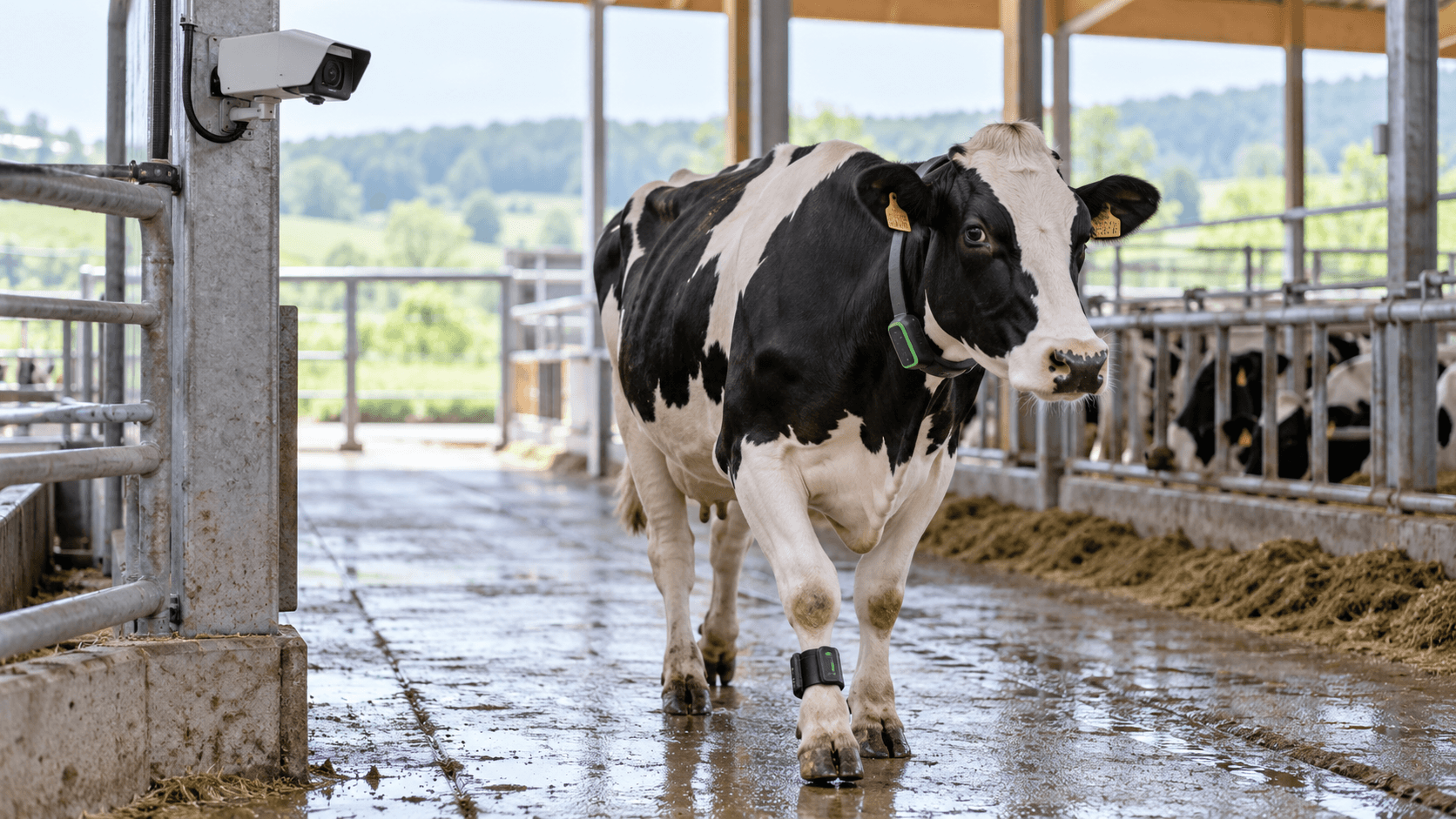
Why lameness is hard to spot in time
At an early stage, a lame cow's posture and stride length are the only things that change. Cows hide pain, and staff see the herd in motion only in snatches. In a study of 205 dairy farms in England and Wales, an average of 36.8% of cows were lame, yet most farmers did not consider lameness a serious problem on their farm.
So the job of any system is to find cows with early signs and show who needs examining. For more on the causes and stages of lameness, see Lameness in Cows: Causes, Types, Stages and Early Detection.
1. Visual assessment and gait scoring
A herd manager or vet watches the cows walk and gives each a score on a scale from 1 to 5.
- Pros: no equipment is needed, and the specialist spots other problems at the same time.
- Cons: scoring takes a lot of time, so it is done rarely. Different people score differently, and early stages are easy to miss.
2. Leg-mounted pedometers
A sensor on the leg counts steps, lying time and how many times the cow lies down and gets up. It sees lameness indirectly: a lame cow walks less and lies down longer.
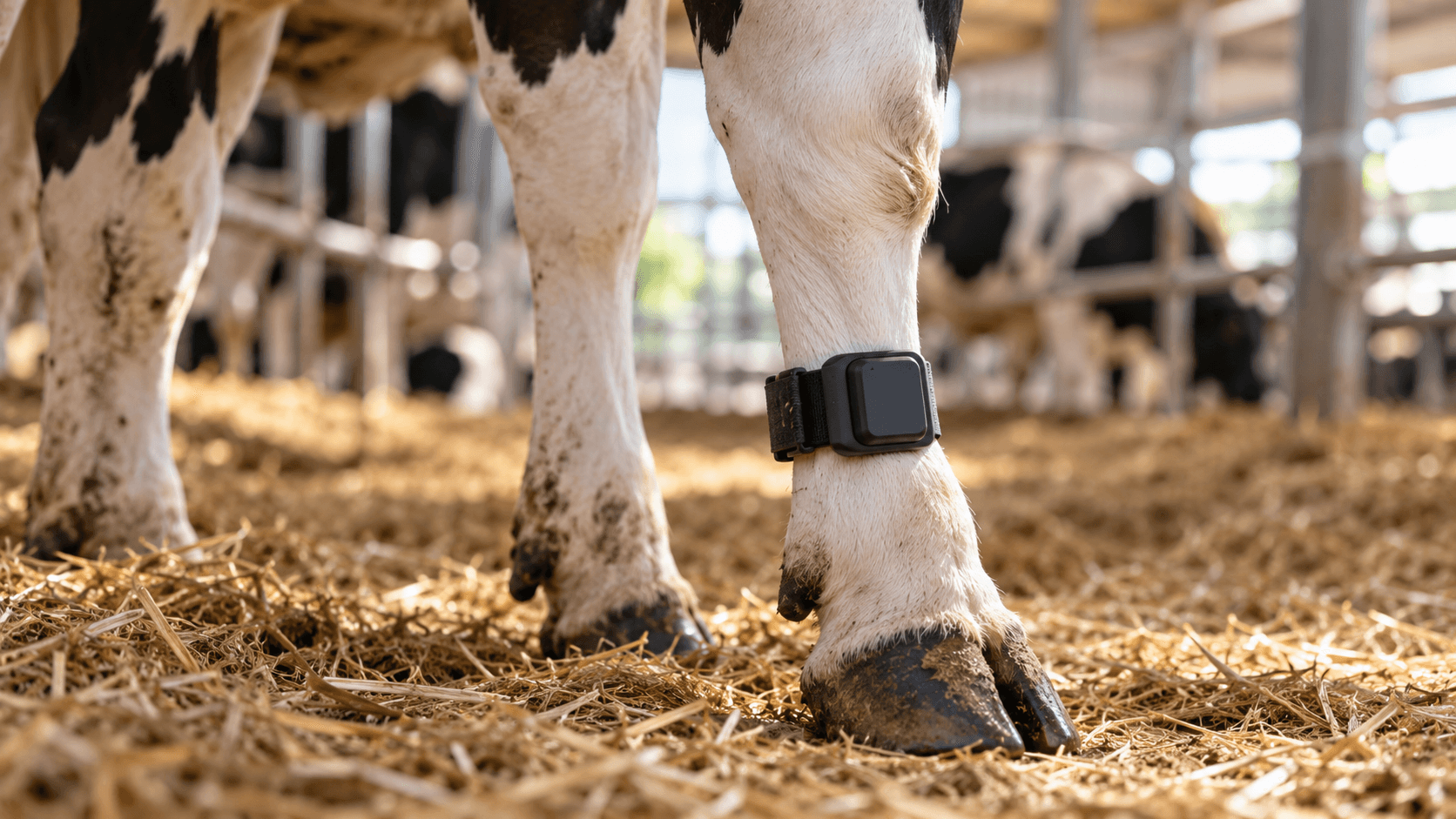
- Pros: works around the clock wherever the cow is. The same sensors often help with heat detection.
- Cons: every cow needs a device. It has to be fitted on every new heifer, and its strap and battery need looking after. Activity changes not only with lameness but also with heat, hot weather or regrouping, so the signal can be inaccurate.
3. Collars
A collar measures activity, rumination and time at the feed bunk. Its main job is heat detection and spotting general health problems: with many diseases, the cow ruminates less. A collar picks up lameness only from indirect signs.
- Pros: one sensor provides data for several tasks at once.
- Cons: as with pedometers, every cow needs a device, and it must be maintained.
4. Platforms with load sensors
The cow walks across a platform in the floor, and sensors measure how she distributes her weight between her legs. A lame cow puts less load on the sore leg.
- Pros: the platform measures the load on each leg directly, and the cow wears nothing.
- Cons: the platform has to be built into the passageway and maintained.
5. AI-powered cameras
A camera at the passageway films every cow, and a neural network assesses her gait: stride length and speed, symmetry of weight bearing, back arch. In essence, the system does what a herd manager does when scoring on the scale, but every time a cow walks past the camera.
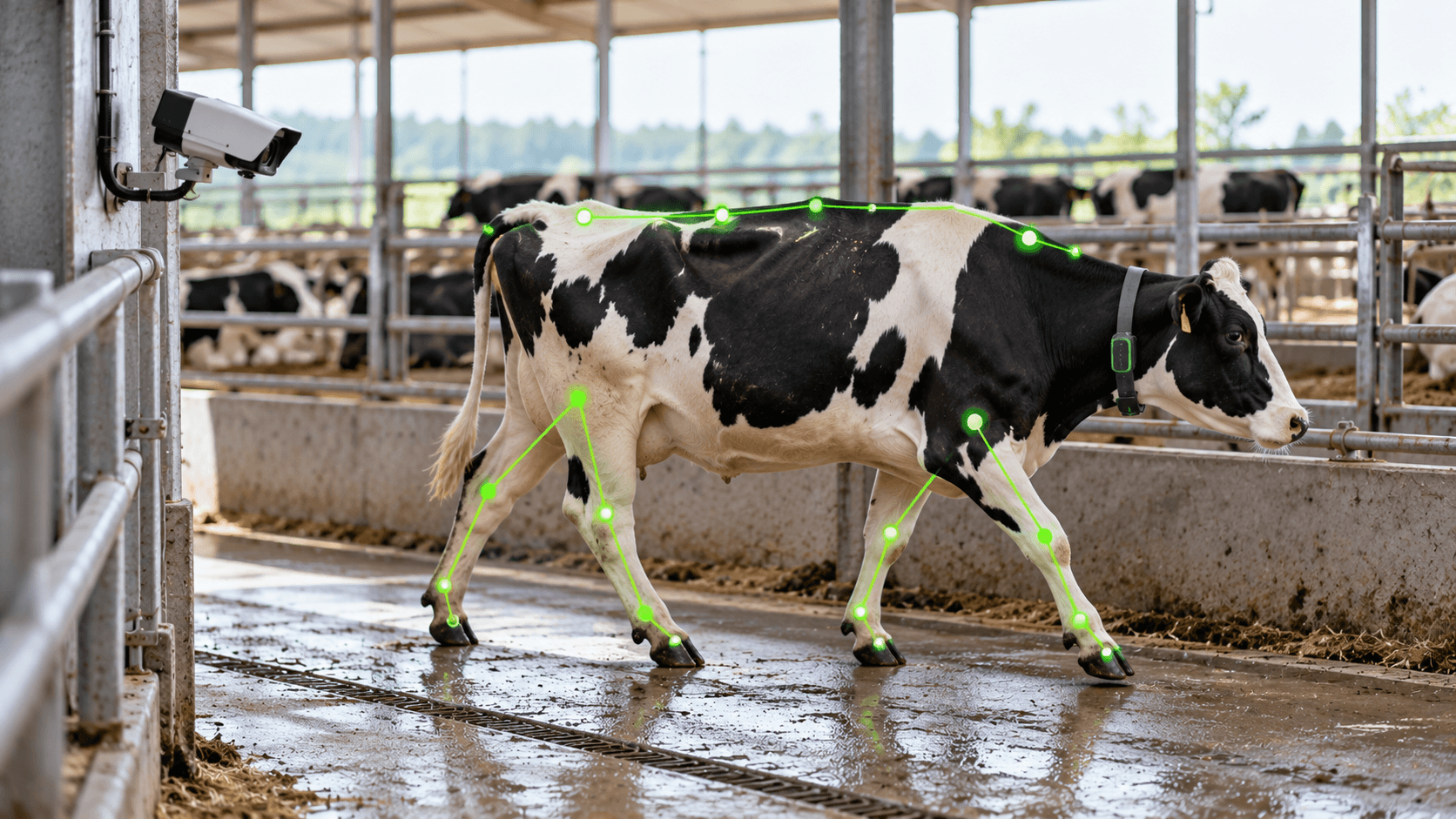
- Pros: the system looks at the gait itself rather than indirect signs. The cow wears nothing, and new heifers do not need to be fitted with sensors.
- Cons and requirements: you need a passageway where cows walk one at a time, such as the milking parlor exit. The system only sees cows within the camera's field of view. To know which cow is walking past, the system has to identify her: by ear tag, by chip or by appearance.
In short: how the methods differ
- What the cow wears. Pedometers and collars: a device on every cow. Visual assessment, platforms and cameras: nothing.
- What is measured. Visual assessment and cameras: the gait itself. Pedometers and collars: activity and lying. Platforms: the load on the legs.
- How often. Visual assessment: rarely, on a schedule. All other methods: continuously.
- What staff do. With visual assessment: all the work themselves. With sensors: fit and maintain them. With platforms and cameras: maintain the equipment in the passageway and examine cows from the list.
What to ask a supplier
- What dataset was the stated accuracy obtained on? Were the results compared with a vet's assessment?
- Does the system work on commercial farms, or only in research so far? How many cows are monitored?
- How does the system identify which cow is walking past?
- What needs to be installed on the farm, and who maintains it?
- How are notifications delivered, and what exactly do staff see?
- How long does the launch take, and can you start with a pilot?
How it works in FusionAI
The FusionAI early lameness detection system is a ready-to-deploy solution based on cameras and AI. Here are the answers to the questions above:
- Where it works. FusionAI monitors more than 5,000 head of cattle.
- How it identifies a cow. By head and coat pattern, with no ear tags, chips or collars. Identification accuracy on the company's dataset is 99.7%.
- What is installed. Cameras at the exit of the milking parlor. Video is processed on a server in the background; no dedicated maintenance staff are needed, and the team installs updates remotely.
- What it assesses. Stride speed and length, asymmetry of weight bearing, back arch and micro-pauses. The system assigns each cow a risk score.
- What staff see. A list of cows to examine. Notifications arrive in the web dashboard, in Telegram or by SMS.
- Which farms it suits. Both farms with 50–200 cows and complexes with 1,000 cows or more.
- Launch. A turnkey pilot takes 6–8 weeks.
Frequently asked questions
Which is better for detecting lameness: a pedometer or a camera?
A pedometer picks up lameness indirectly, from the cow walking less and lying down longer. An AI camera assesses the gait itself and does not need a device on every cow. A pedometer works wherever the cow is, while a camera needs a passageway where cows walk one at a time.
Can lameness be detected without sensors on the cow?
Yes. AI cameras and load-sensor platforms are installed in the passageway, and the cow wears nothing. In the FusionAI system, cows are recognized by appearance, so ear tags and chips are not needed either.
What farms is a camera-based system suitable for?
The FusionAI system suits farms of any size: from 50-cow farms to large agricultural holdings. A small farm needs only a few cameras, while in a holding the system is deployed across several farms at once.
Does the system replace a vet's examination?
No. The system shows which cows have developed signs of lameness. The cause and treatment are determined by a vet or hoof trimmer during an examination.
Want to test the system on your farm? Send us a request: we will discuss your farm's needs and prepare a pilot plan and a commercial proposal.
Related FusionAI solutions
If this topic is relevant for your farm, explore these solutions: