Why Is a Cow Producing Less Milk? Causes and What to Do
If a cow's milk yield has dropped, the cause may be the stage of lactation, feed, water, udder or hoof disease, heat or stress during milking. First work out whether yield is falling in one cow or in the whole group, and whether it is dropping suddenly or gradually. Below are the main causes and the order in which to check them.
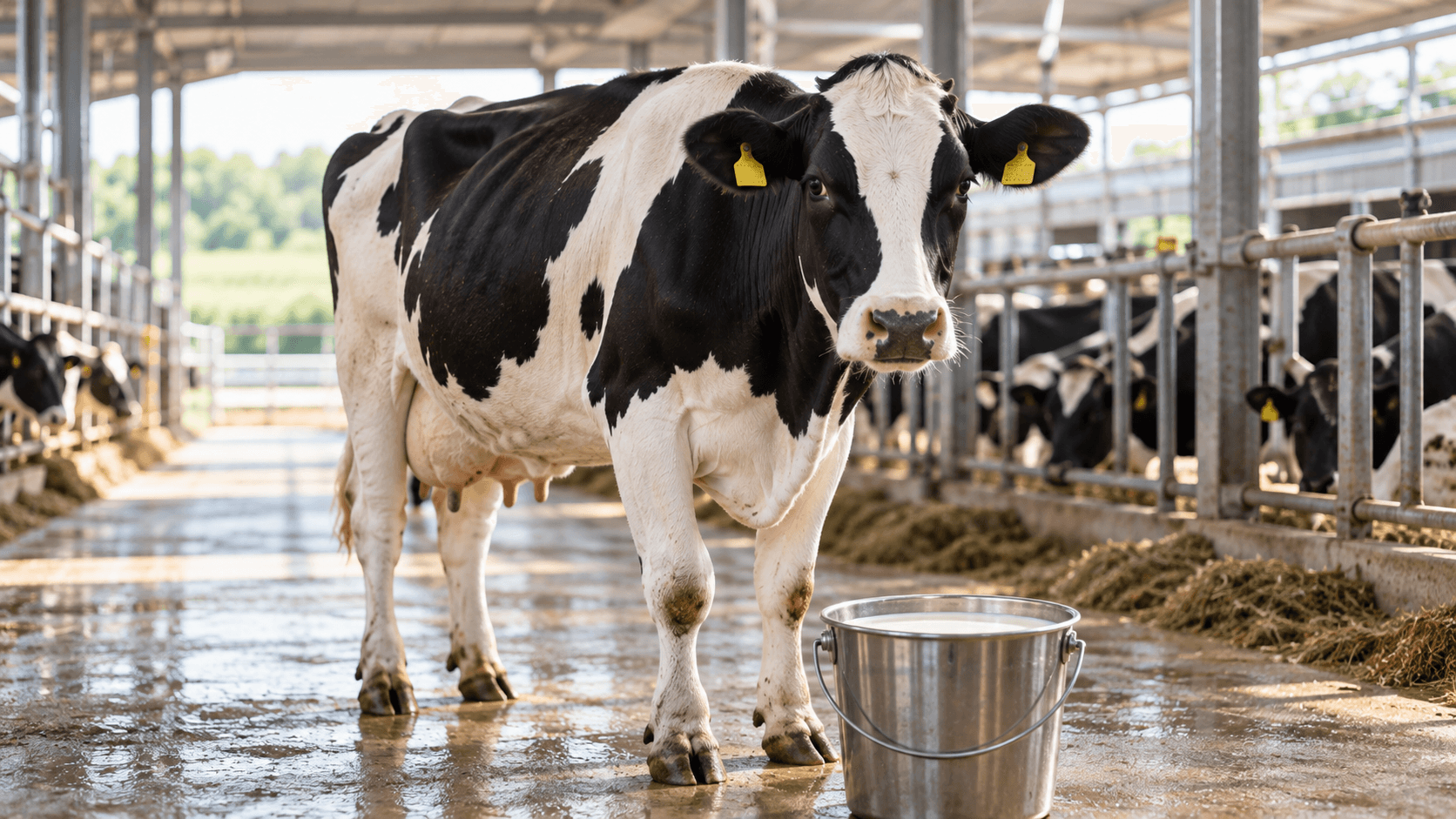
First: is it normal or a problem?
Milk yield changes over the lactation, and part of the decline is normal.
- After calving, yield rises and peaks at about 40–60 days. First-calf heifers peak later, at about 70–100 days, and produce less than mature cows.
- After the peak, yield gradually declines until dry-off. In the second half of pregnancy the decline speeds up.
- 45–60 days before the next calving, the cow is dried off: milking stops so that the udder can rest and recover.
A bad sign is a sharp drop in yield over a few days, or no increase in the first weeks after calving.
1. Feed
Without energy and protein, a cow cannot produce a lot of milk. Yield drops when:
- the ration lacks energy or protein;
- the feed was changed abruptly: rumen microbes need time to adapt, so rations are changed gradually;
- the hay or silage is of poor quality: mold, rot, overdried feed;
- there is feed, but the cow cannot get to it: the feed bunk runs empty, feed is not pushed up, stronger cows chase weaker ones away.
Signs: the cow ruminates less, loses weight, and her manure changes.
2. Water
Milk is about 87% water, so there is no milk without water. A lactating cow drinks 60–120 liters a day, and a high-yielding cow in hot weather up to 200 liters. A simple rule of thumb: she needs about twice as much water as the milk she gives, so a cow producing 35 liters of milk needs about 70 liters of water.
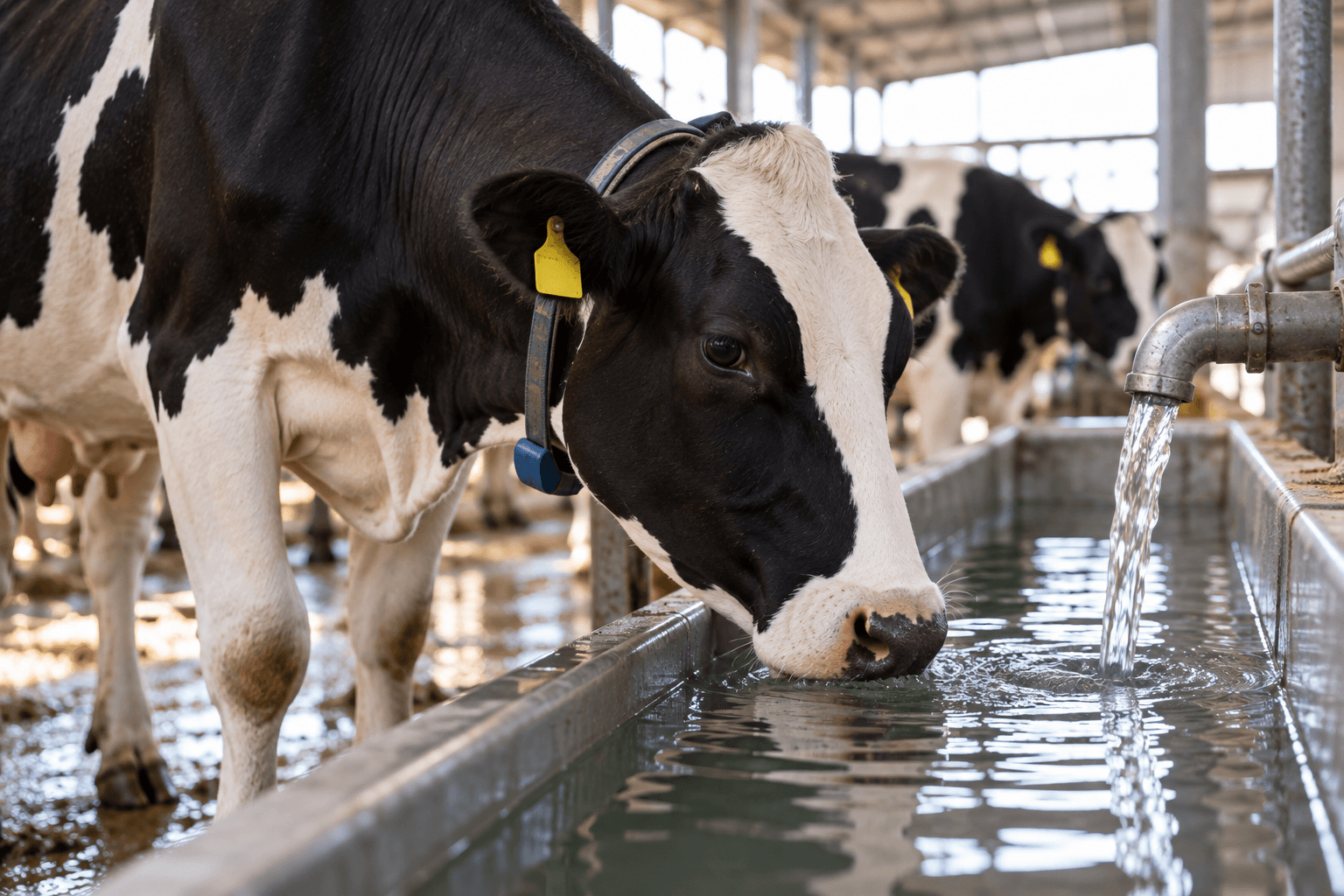
Check that there are enough drinkers for the group, the water pressure is adequate, the water is clean and it does not freeze in winter.
3. Mastitis
Mastitis is one of the main causes of milk loss. Clinical mastitis shows as flakes and clots in the milk and a swollen udder. Subclinical mastitis cannot be seen, but it still reduces yield, and it is 15–40 times more common than clinical mastitis.
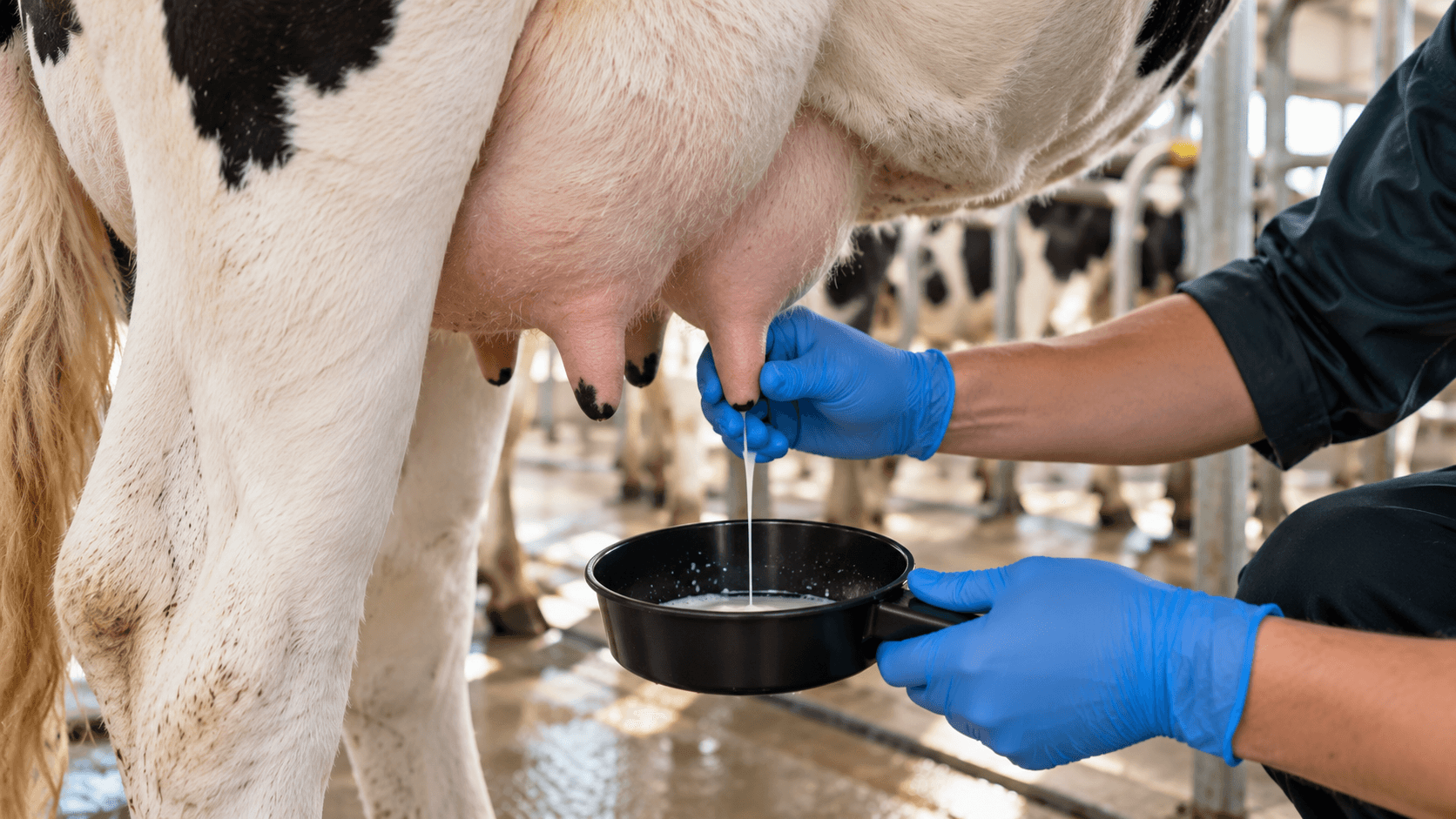
If yield has dropped in one cow, strip the first streams into a cup with a dark bottom and do a quick mastitis test. Read more in Mastitis in Cows: Signs, Causes, Treatment and Prevention.
4. Lameness
Walking hurts a lame cow. She goes to the feed bunk and drinker less often and eats less, so she loses milk yield and body condition. Early stages of lameness are easy to miss: the cow still walks, but her stride is shorter and her back arches when she walks. Read more in Lameness in Cows: Causes, Types, Stages and Early Detection.
5. Post-calving diseases
The first weeks after calving are the riskiest period. This is when these most often occur:
- ketosis: the cow eats poorly, loses weight, and her breath may smell of acetone;
- milk fever (hypocalcemia): weakness, the cow struggles to get up or cannot get up;
- retained placenta and inflammation of the uterus (metritis);
- displaced abomasum;
- rumen acidosis.
All these diseases reduce yield. If after calving a cow eats poorly, is sluggish or has a fever (normal is 38–39.5 °C), call the vet.
6. Heat
Cows tolerate heat poorly. Heat stress starts at about 22 °C and 45% humidity. The cow eats less, stands more, lies down less, and yield falls. High-yielding cows suffer the most.
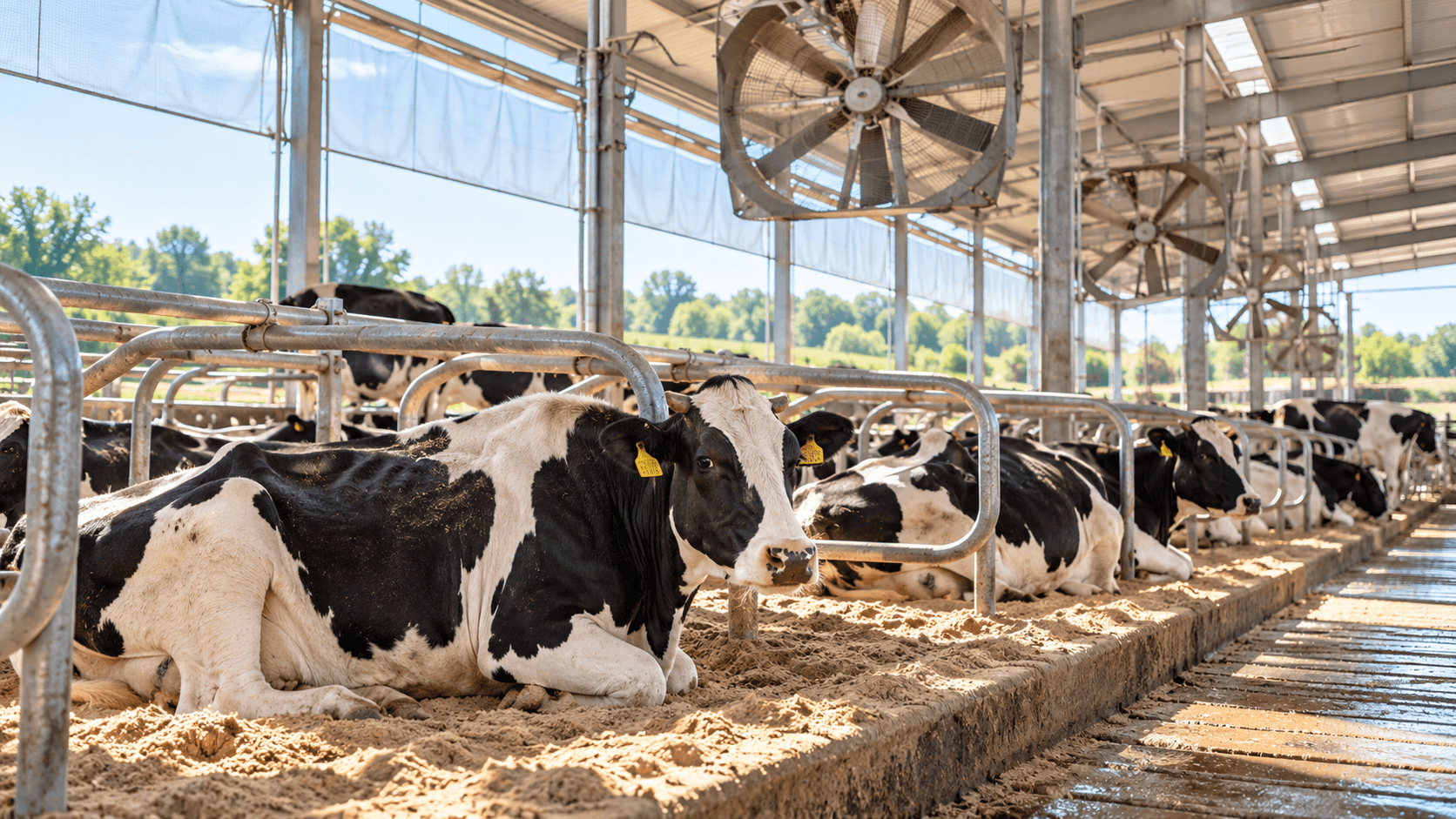
What helps: shade, ventilation and fans in the barn, free access to cool water, and feeding during the cooler hours of the day.
7. Housing
A healthy cow lies down 10–14 hours a day. If there are fewer stalls than cows, or the stalls are hard and cramped, cows lie down less and produce less milk. Wet, slippery floors, frequent regrouping, noise and rough handling also reduce yield.
8. Milking
Milk let-down is driven by the hormone oxytocin. If a cow is frightened or hit, adrenaline is released. It blocks the action of oxytocin, and the cow does not let down all her milk.
What matters during milking:
- milk at the same times, calmly, without shouting or hitting;
- attach the teat cups about 60–90 seconds after udder preparation starts, once milk let-down has begun;
- look after the milking equipment: vacuum, pulsation, liners;
- milk the cow out completely.
What to check first
- Yield dropped in one cow. Look for a disease: check her temperature, appetite, rumination, milk (first streams, quick test) and gait.
- Yield dropped in a group or across the farm. Look for a common cause: a feed change, water, heat, changes in milking or equipment, regrouping.
- Yield is not rising after calving. Most likely the cause is post-calving disease or feeding in the transition period.
Call the vet immediately if a cow has a temperature above 39.5 °C, is not eating, her milk has changed, or yield has dropped sharply in several cows.
How to spot a problem before yield drops
On a large farm, each cow's yield is visible from the milk meters. But the cause often shows up before yield falls: the cow eats less, lies down less, starts to limp. Sensors and cameras pick up these changes.
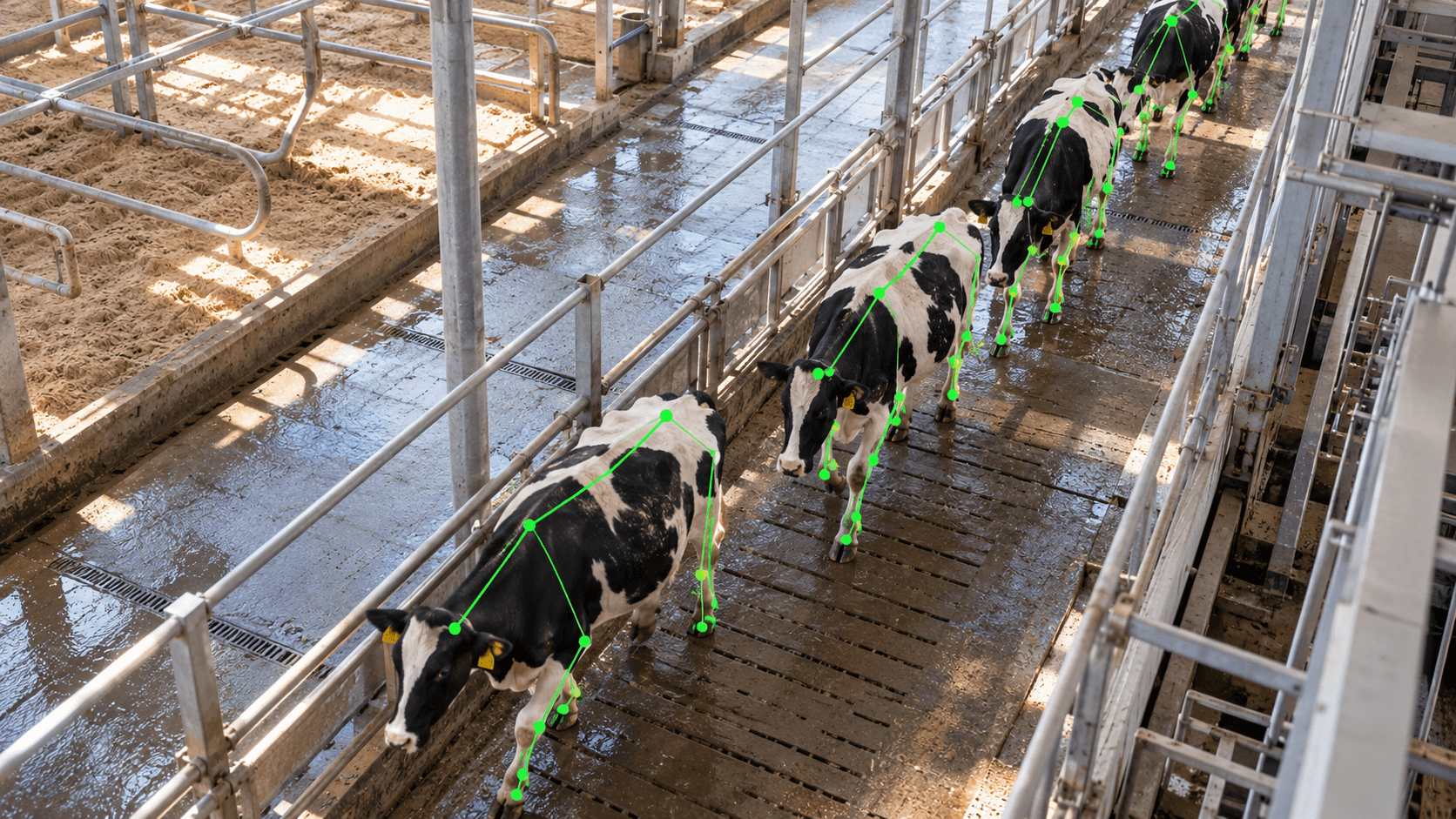
FusionAI cameras recognize every cow without ear tags and detect early signs of lameness. The mastitis and feed bunk modules are currently being piloted on partner farms.
Frequently asked questions
Why did my cow's milk yield drop suddenly?
Most often because of disease (mastitis, lameness, post-calving diseases), an abrupt feed change, lack of water, heat or severe stress. If yield dropped in one cow, check her health. If in many, check the feed, water and conditions.
Why does a cow give little milk after calving?
Possible causes: ketosis, milk fever, retained placenta or metritis, mastitis, underfeeding in the transition period. In first-calf heifers, yield rises more slowly and peaks later. If the cow eats poorly and is sluggish, call the vet.
How much water does a lactating cow need?
60–120 liters a day, and up to 200 liters for a high-yielding cow in hot weather. Rule of thumb: about twice as much as the milk she produces.
Does heat affect milk yield?
Yes. Heat stress starts at about 22 °C and 45% humidity: the cow eats less and produces less milk. Shade, ventilation and free access to water help.
Related FusionAI solutions
If this topic is relevant for your farm, explore these solutions: