Ketosis in cows: signs, causes, treatment and prevention
Ketosis is a metabolic disorder in dairy cows during the first weeks after calving: the cow spends more energy on milk than she gets from feed. Subclinical ketosis is the more common form: the cow looks healthy but loses milk and gets sick more often. Below we cover the signs, causes, how to test a cow, treatment and prevention.
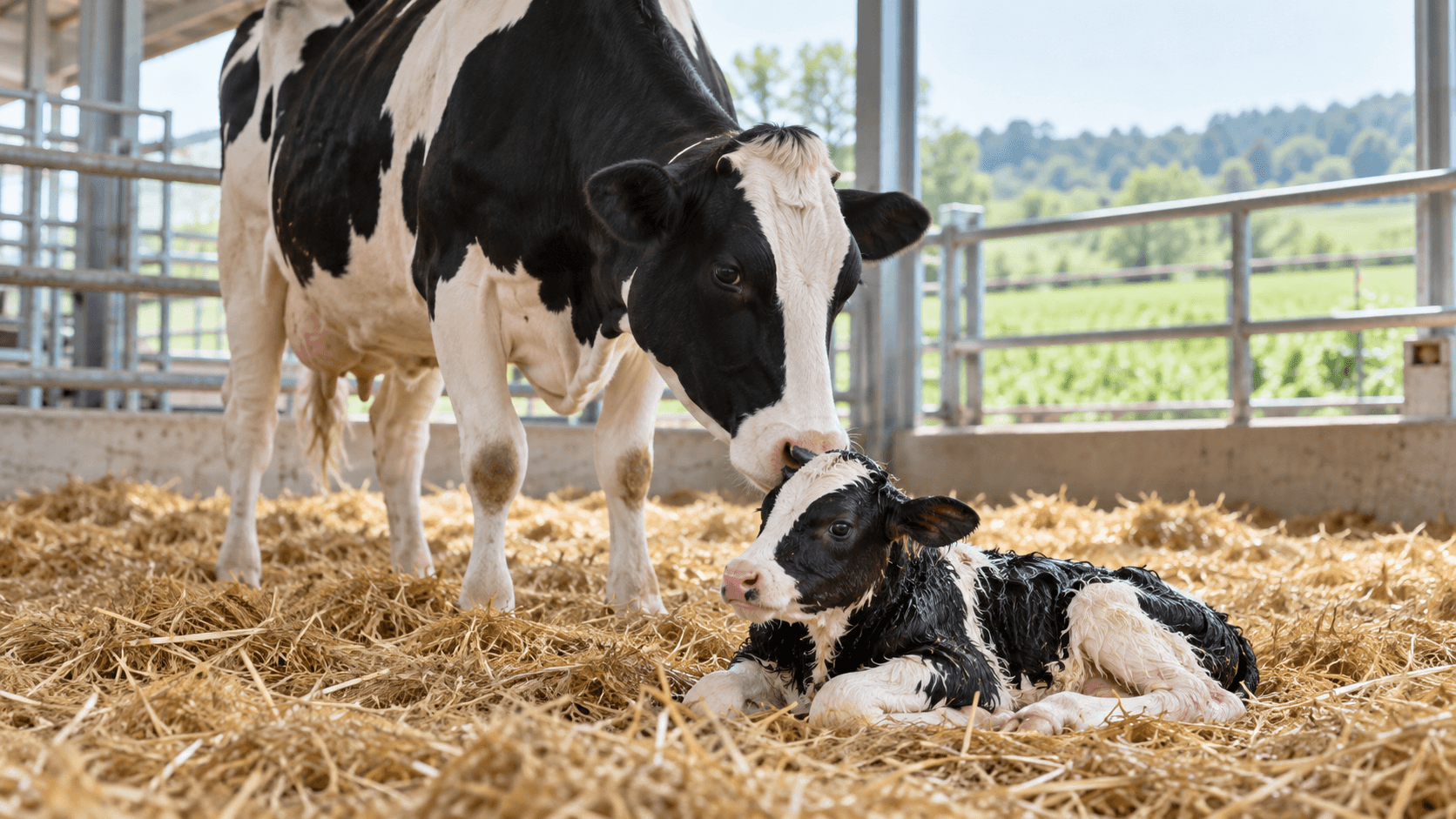
What ketosis is and why it happens
After calving, milk yield rises quickly, but appetite recovers more slowly. Feed does not supply enough energy, so the cow starts burning her fat reserves. The liver cannot fully process all that fat, and ketone bodies build up in the blood: beta-hydroxybutyrate (BHB), acetoacetate and acetone.
Ketosis is most common in high-yielding cows in the first weeks after calving.
Subclinical and clinical ketosis
Subclinical ketosis has no visible signs. The cow eats and milks, but her blood ketone level is elevated. The usual threshold is 1.2 mmol/L of BHB in the blood.
Subclinical ketosis is very common:
- in a US study on four farms, 43% of cows had it between days 3 and 16 after calving;
- in a European study, 22% of cows had it on average, ranging from 11% to 37% between herds.
Subclinical ketosis is dangerous because it leads to other diseases. In the same European study, cows with subclinical ketosis had 1.5 times higher odds of metritis and 9.5 times higher odds of clinical ketosis, and displaced abomasum was 5 times more likely.
Clinical ketosis affects 2–15% of cows. Blood ketone levels reach 3.0 mmol/L or higher, and the cow shows signs of illness.
Signs of clinical ketosis
- the cow eats less;
- milk yield drops;
- the cow is dull and slow to react, her eyes are sunken, and her abdomen looks empty;
- she loses weight faster than usual;
- manure is dry and firm;
- her breath, milk and urine smell of acetone. This is a clue, not a reliable test: not everyone can smell it.
Less often, cows develop nervous ketosis. The cow licks herself and objects, chews on pipes and barriers, staggers, may become aggressive and bellow loudly. It is easy to confuse with milk fever, so call a vet if you see these signs.
Causes and risk factors
- Over-conditioning at calving. Cows calving at a body condition score (BCS) above 3.5 develop ketosis about twice as often as cows calving at 3.25. They have a poorer appetite after calving and burn fat faster.
- Poor appetite around calving: crowding at the feed bunk, regrouping, heat stress, uncomfortable stalls.
- Other post-calving diseases: metritis, retained placenta, displaced abomasum, mastitis, lameness. Any disease that makes a cow eat less raises the risk of ketosis.
- Ration mistakes for dry and fresh cows.
- High production: the more milk a cow gives, the more energy she needs.
How to test a cow for ketosis
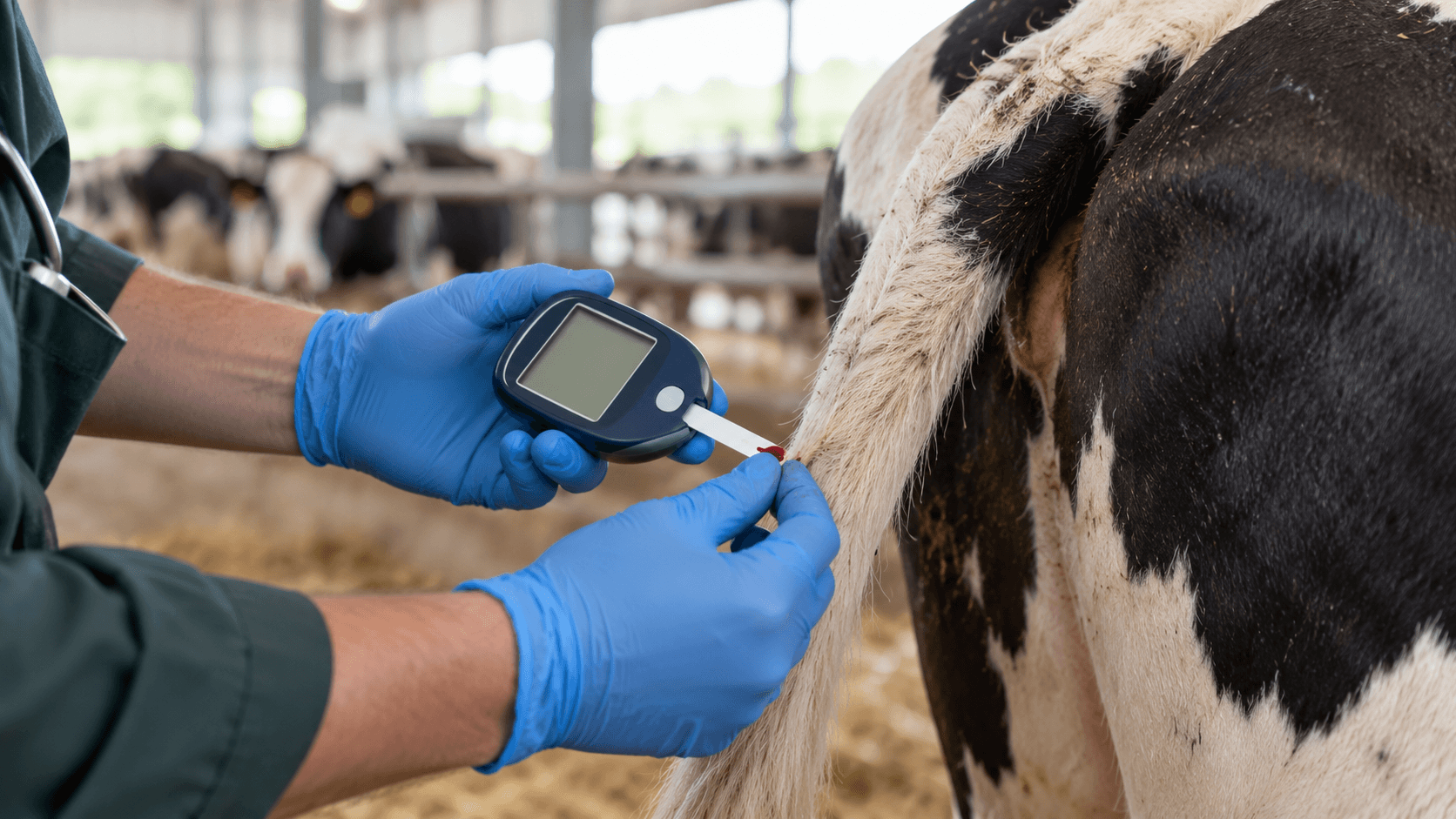
- Blood test with a handheld meter. A drop of blood from the tail vein, with the result right at the cow. Below 1.2 mmol/L is normal, 1.2 to 2.9 is subclinical ketosis, 3.0 and above is clinical ketosis.
- Milk or urine test strips. Cheaper and simpler, but usually less accurate than a blood test.
- Milk recording data. If milk fat is more than 1.5 times milk protein, the cow should be tested for ketosis.
Fresh cows are worth testing during the first two weeks after calving, following a schedule your vet recommends.
Treating ketosis
Treatment is prescribed by a vet. It usually includes:
- Oral propylene glycol. This is the main treatment for ketosis; the vet decides on the dose and duration.
- Intravenous treatment in severe cases.
- Treating the underlying cause. If ketosis started because of metritis, a displaced abomasum or mastitis, those are treated too.
- Feed and rest. A sick cow needs fresh feed and water without competition from other cows.
Preventing ketosis
- BCS at calving around 3.25, give or take 0.25. The key is not to overfeed cows during the dry period.
- BCS loss after calving of no more than 1 point. Cows that lose more come into heat later and are harder to get in calf.
- Appetite around calving: fresh feed, enough space at the feed bunk, no crowding or unnecessary regrouping, comfortable stalls and clean water.
- Rations for dry and fresh cows are formulated by a dairy nutritionist.
- Regular ketone testing of fresh cows.
- Prompt treatment of other post-calving diseases.
Ketosis is one of the reasons cows are culled early. Read more in Dairy Cow Longevity: Why Cows Are Culled So Early.
How daily body condition scoring helps
Body condition is one of the main risk factors for ketosis. But scoring every cow by hand every day takes a long time, and different people score differently.
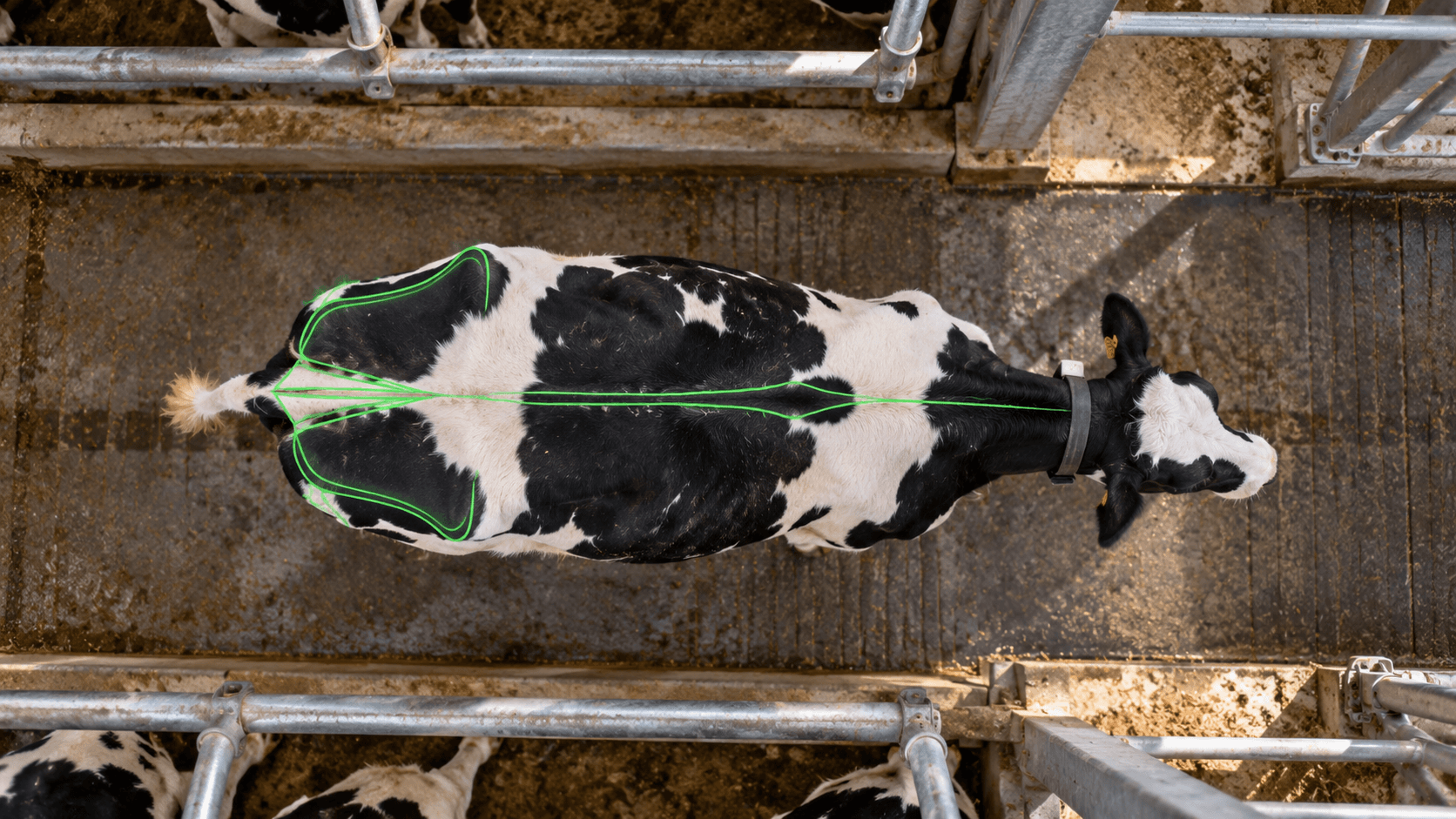
The FusionAI body condition scoring module scores every cow's body condition (BCS) daily from a camera image. It shows trends for each cow and each group and alerts you to sudden changes. The weighing module estimates a cow's live weight every time she walks under the camera. Both modules are ready for deployment.
The system does not diagnose ketosis; that is confirmed with a test. But it shows which cows came to calving over-conditioned and which are losing condition quickly after calving. Those cows should be tested first.
Frequently asked questions
What is ketosis in cows, in simple terms?
It is an energy shortage after calving. The cow gives a lot of milk but is not yet eating enough, so she burns body fat. As a result, ketone bodies build up in her blood, and she eats less, loses milk and gets sick more often.
How can you tell if a cow has ketosis?
Clinical ketosis is visible: the cow eats less, loses milk, is dull, and may smell of acetone. Subclinical ketosis has no visible signs and can only be detected by testing blood, milk or urine for ketones.
How is ketosis in cows treated?
The main treatment is oral propylene glycol; in severe cases, drugs are given intravenously. The vet decides on the dose and treatment plan. It is important to find and treat the cause of ketosis, such as metritis or a displaced abomasum.
How can ketosis be prevented?
Do not overfeed cows during the dry period: BCS at calving should be around 3.25. Keep appetite up around calving and test fresh cows for ketones regularly during the first two weeks after calving.
Related FusionAI solutions
If this topic is relevant for your farm, explore these solutions: