Farm feed table: how to keep cows fed
A cow eats for 3–5 hours a day across 6–10 meals, and every hour the feed bunk sits empty means uneaten feed and lost milk. Below we cover how to set up the feed bunk, how often to push up feed, what level of refusals is normal, and how cameras help monitor the bunk around the clock.
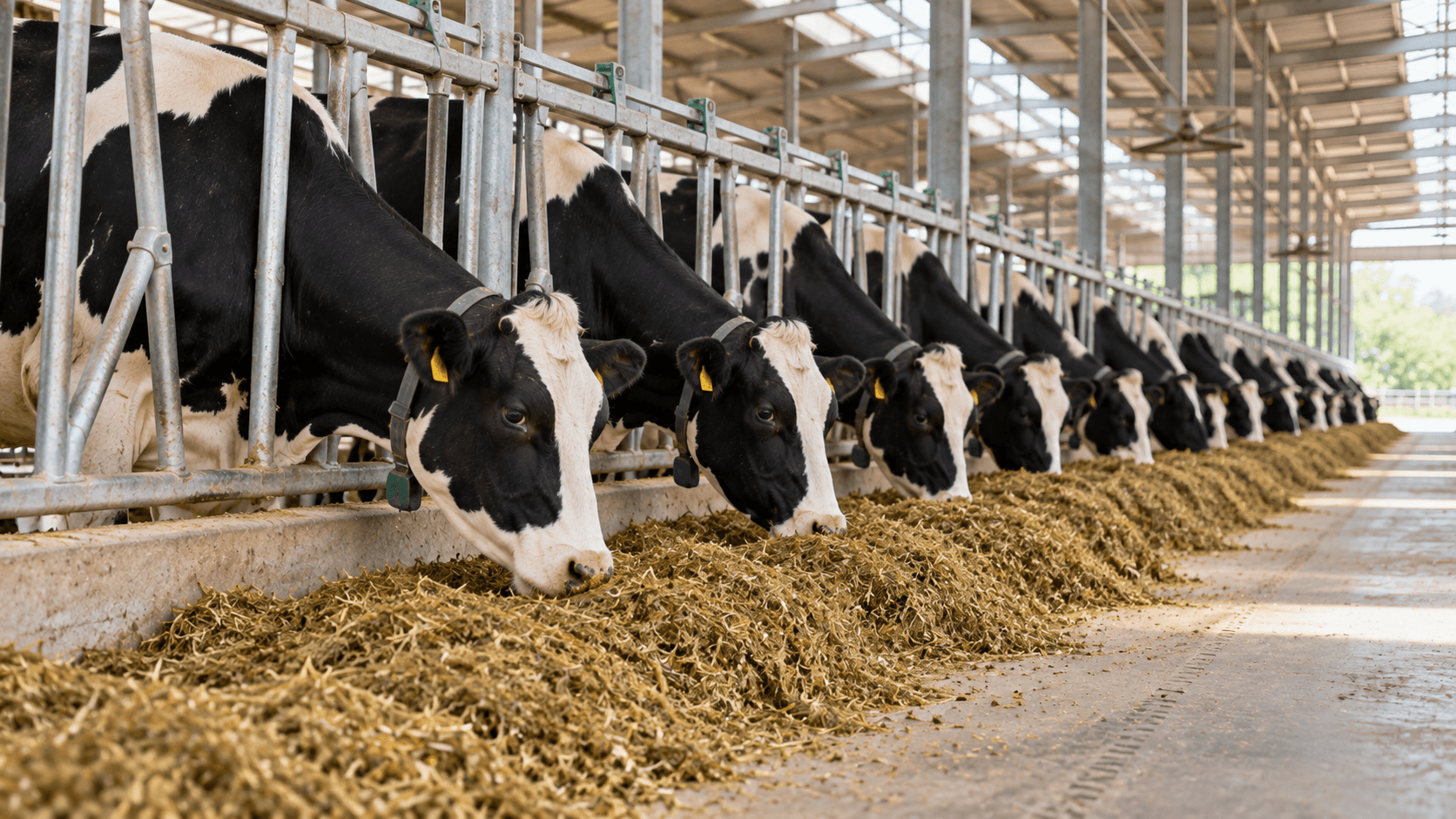
How cows eat
A high-yielding cow eats her daily ration in 3–5 hours, spread over 6–10 meals. Her largest meals come right after fresh feed is delivered and when she returns from milking.
The feed bunk has a pecking order. Dominant cows come first and pick the best feed, while subordinate cows eat later and get what is left. If there is too little feed or too little space, subordinate cows go short.
Why an empty feed bunk is a problem
- Cows eat less. When access to feed is cut off for about 10 hours a day, usually at night, a cow eats roughly 1.6 kg (3.5 lb) less dry matter per day.
- Cows eat too fast. If the bunk has been empty for more than 6 hours, cows rush the feed as soon as it is pushed up or delivered. This puts a load on the rumen and risks digestive upsets.
- Less milk. Uneaten feed means lost milk yield. Other reasons milk yield drops are covered in Why Is a Cow Producing Less Milk? Causes and What to Do.
- Ketosis risk in fresh cows. After calving, every missed meal deepens the energy shortage. Read more in our article on ketosis in cows.
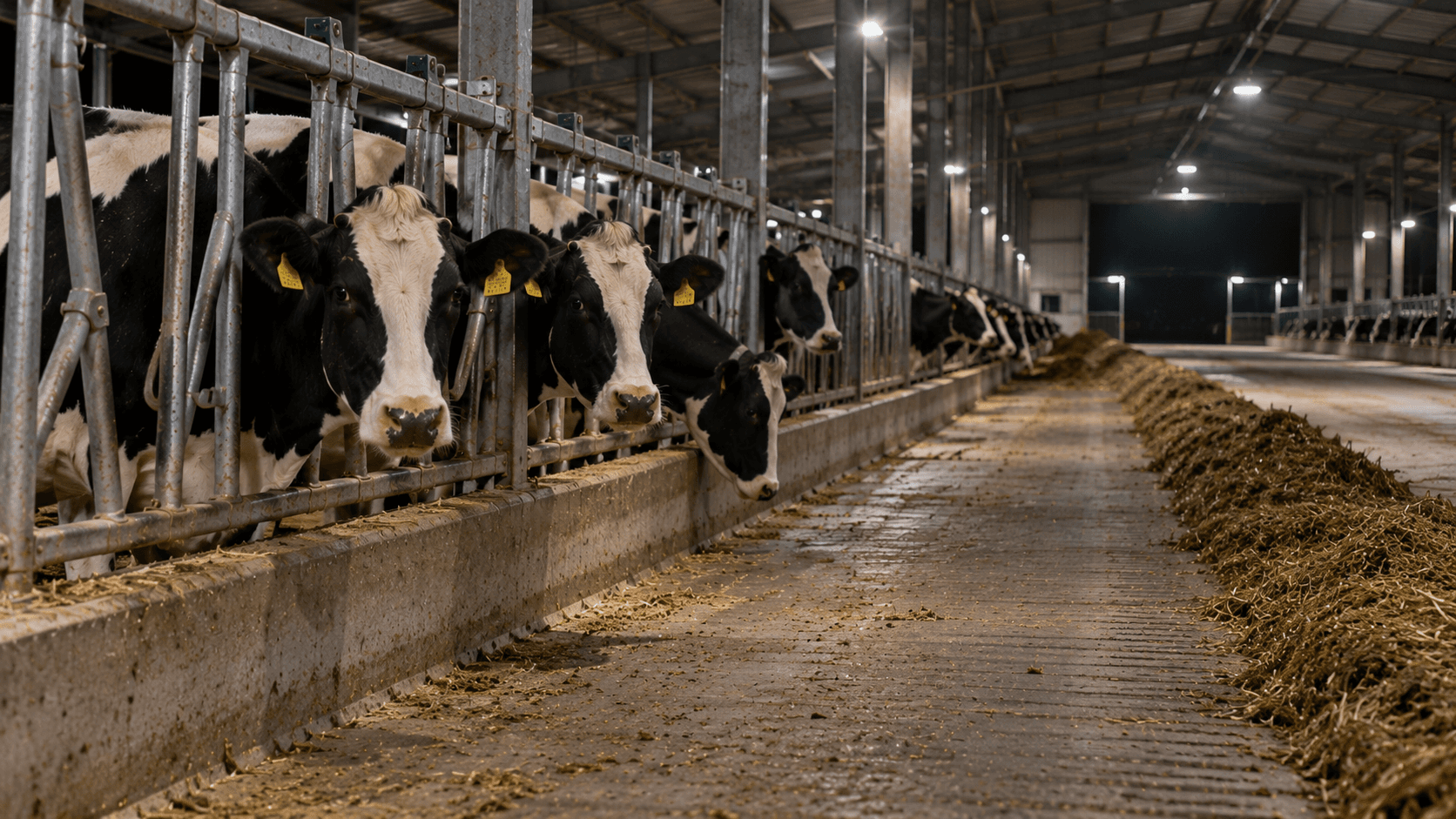
Feed sorting
Cows sort the total mixed ration (TMR), picking out concentrates and fine particles and leaving long forage behind. As a result, a cow does not eat the ration the nutritionist formulated: she gets less fibre and more concentrate. This raises the risk of rumen acidosis. According to Canadian researchers, milk fat drops by 0.15% for every 10% of long particles the cows refuse.
The cows that come to the bunk last suffer most from sorting: they get a mix from which the best has already been picked out.
Sorting is reduced by proper mixing and the right moisture level in the TMR, as well as by frequent push-ups, which remix the feed on the bunk.
Rules for a good feed bunk
- Bunk space. About 60 cm (24 in) per lactating cow. In close-up and fresh cow groups, 75–90 cm (30–36 in), because competition there is most harmful.
- Feed push-ups. The first push-up 1–2 hours after delivery, then every 1–2 hours day and night. A cow should not go without feed for more than 3 hours. It is especially important to push up feed when cows return from milking, and not to forget the night.
- Refusals. For lactating cows, aim for 1–2% of the daily feed delivered; for fresh cows, about 5%. If the bunk empties long before the next delivery, cows are underfed. If refusals are high, feed is being wasted.
- A clean bunk. Old refusals are removed before each new delivery so feed does not heat up and spoil.
- Records. Feed delivered and refusals are weighed, at least for close-up and fresh cow groups.
Why the feed bunk is hard to monitor by hand
The feed bunk is long, there are several groups, and empty sections appear at different times. Night is when staff numbers are lowest, and it is exactly at night that the bunk most often runs empty. Feed is usually pushed up on a schedule rather than when it is actually needed. Nobody usually records how much feed is left and when, so empty hours go unnoticed.
FusionAI feed bunk monitoring
The FusionAI feed bunk monitoring system is entering its pilot phase, and we are recruiting partner farms.

What the system does:
- Tracks refusals. Cameras with computer vision track TMR refusals along the whole length of the bunk and estimate feed intake in real time.
- Tells you what to do. The system tells you when and how much feed to push up or add.
- Shows the whole farm. The dashboard runs around the clock: heat maps of feed intake by time and group, alerts on critical refusal levels, and recommendations for feeding logistics.
- Fits into your processes. Cameras are installed on the farm, and an API is available for exchanging data with your feeding equipment and farm management software.
The goal of the pilot is to cut feed waste and empty hours at the bunk so cows eat evenly and milk steadily.
What a pilot farm gets:
- equipment and software on discounted pilot terms;
- implementation support from the FusionAI team;
- a say in the final features of the system.
Frequently asked questions
How often should feed be pushed up for cows?
The first push-up 1–2 hours after delivery, then every 1–2 hours day and night. A cow should not go without feed for more than 3 hours. Push-ups after milking and at night are especially important.
How much feed bunk space does a cow need?
About 60 cm (24 in) per lactating cow. In close-up and fresh cow groups, 75–90 cm (30–36 in) per cow.
What level of feed refusals is normal?
For lactating cows, aim for 1–2% of the daily feed delivered; for fresh cows, about 5%. An empty bunk long before the next delivery means cows are underfed; high refusals mean feed is being wasted.
How do cameras monitor the feed bunk?
Cameras film the bunk, and computer vision estimates how much feed is left on each section and how quickly cows are eating it. The FusionAI system tells you when to push up or add feed and shows feed intake by time and group.
Want to join the pilot? Leave a request and we will discuss how feeding works on your farm and the terms of the pilot.
Related FusionAI solutions
If this topic is relevant for your farm, explore these solutions: